
Advanced CBCT Scans for Precise Dental Care
Cone Beam Computed Tomography (CBCT) scanners represent a significant advancement in dental imaging. This technology allows us to create detailed three-dimensional images of your teeth, jaw, and surrounding structures. These precise 3D views are invaluable for accurate diagnosis and effective treatment planning, helping us provide you with the best possible care.
What is a CBCT Scanner?
A CBCT scanner is an advanced imaging tool that uses a cone-shaped X-ray beam to capture a complete 3D picture of your mouth. Unlike traditional dental X-rays, which provide flat, two-dimensional images, a CBCT scan offers a comprehensive view of your teeth, jawbone, nerves, and soft tissues. This detailed 3D model helps our team at Brant Smiles Family Dentistry see your oral anatomy from every angle. It allows for a more thorough understanding of your dental health, aiding in precise diagnosis and careful treatment planning.
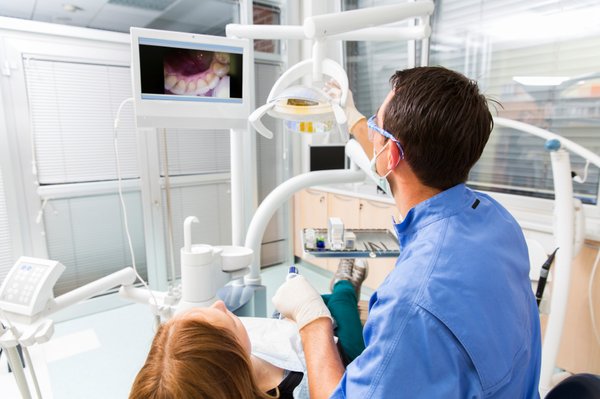
Benefits of 3D Dental Imaging
Using 3D dental imaging offers several important benefits for your care. The detailed views provided by a CBCT scan allow for much greater diagnostic accuracy. We can identify issues that might not be visible on standard 2D X-rays, leading to earlier and more effective interventions.
This technology gives us a complete picture of your oral anatomy, including bone structure, nerve pathways, and sinus cavities. This level of detail is crucial for planning complex procedures. Ultimately, these precise images help us create more predictable and successful treatment plans, improving your overall dental outcomes and comfort.

When Is a CBCT Scan Recommended?
A CBCT scan is often recommended when your dentist needs a more comprehensive view than traditional X-rays can provide. For example, it is invaluable for planning dental implant placement, as it helps us assess bone density and identify vital structures to avoid.
This imaging is also highly beneficial for complex root canal treatments, allowing us to visualize the intricate anatomy of tooth roots. Orthodontic treatment planning, wisdom tooth extractions, and diagnosing temporomandibular joint (TMJ) disorders also benefit greatly from the detailed insights a CBCT scan provides. It helps us understand your unique oral structure to guide precise and effective care.

What to Expect During Your Scan
Getting a CBCT scan is a straightforward and comfortable process. You will be asked to remove any metal objects like jewelry or eyeglasses that might interfere with the scan. During the scan, you will stand or sit still while the scanner rotates around your head for a short period, typically less than a minute.
The process is quick and non-invasive, and you will not experience any discomfort. Once the scan is complete, our dental team will have immediate access to the detailed 3D images. Your dentist will then review these images to discuss their findings with you and develop a personalized treatment plan.
Is CBCT Imaging Safe?
We understand that concerns about radiation are natural. Modern CBCT scanners are designed to use a very low dose of radiation, similar to or even less than a series of traditional dental X-rays. At Brant Smiles Family Dentistry, we only recommend a CBCT scan when the diagnostic benefits clearly outweigh any potential risks.
Our team uses this technology judiciously, ensuring that you receive the necessary diagnostic information while prioritizing your safety. The ability to gain such precise insights into your oral health allows us to provide more effective and targeted care, ultimately benefiting your treatment outcomes.
Frequently Asked Questions
How long does a CBCT scan take?
A CBCT scan is very quick, typically taking less than a minute to complete. The entire appointment, including preparation, is usually brief and efficient.
Is a CBCT scan painful?
No, a CBCT scan is a completely non-invasive and painless procedure. You simply stand or sit still while the scanner moves around your head.
Why would my dentist recommend a CBCT scan?
Your dentist might recommend a CBCT scan to get a detailed 3D view of your mouth, jaw, and surrounding structures. This helps with precise diagnosis and planning for treatments like dental implants, root canals, or orthodontic care.
Is a CBCT scan covered by insurance?
Coverage for CBCT scans varies depending on your specific dental insurance plan. We recommend checking with your insurance provider directly for details on your benefits. Our team can also help you understand the process.